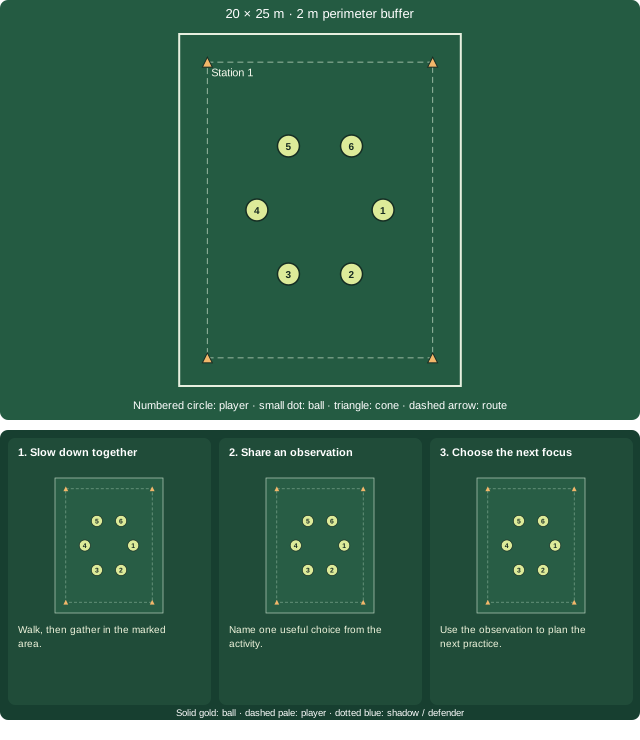
Prepare the first decision
10 minPlayers this activity: 1, 2, 3, 4, 5, 6 · 6 attending
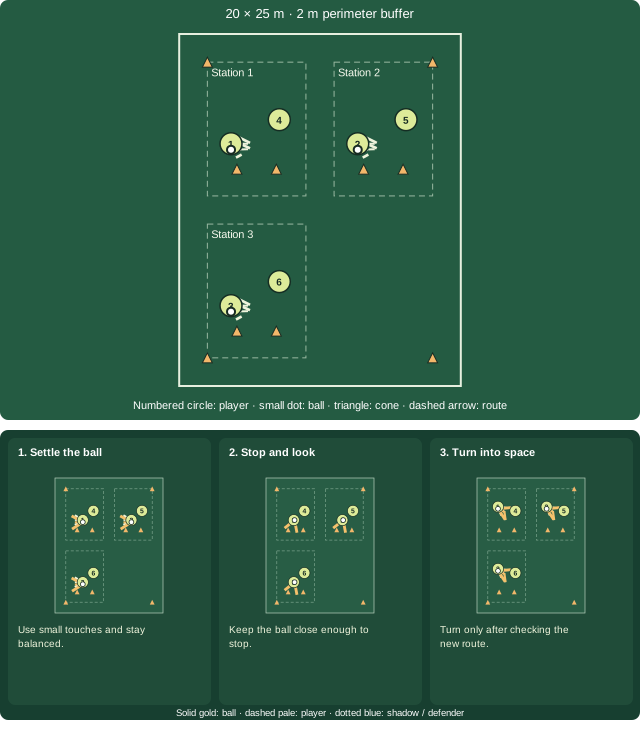
Begin at walking pace in the numbered stations. Walk toward a boundary, stop with room for one sideways step and point to the inside escape. Share the ball when needed; an observer watches the same decision and takes a ball turn on the next assigned round.
Brake early; keep an inside exit. The stop leaves room for another action before the boundary.
Run the activity
- Walk toward a boundary, stop with room for one sideways step and point to the inside escape.
- Pause on a raised hand and point to the space you chose.
- Swap the ball on the round signal and notice this feature: The stop leaves room for another action before the boundary.
Play
- Walk toward a boundary, stop with room for one sideways step and point to the inside escape.
- Ground play only. No heading, sliding, body contact or tackles at a player's feet. Intercept loose ground passes only. Offer water or a pause whenever needed.
Watch for
The stop leaves room for another action before the boundary.
If you see: The player stops only when the ball reaches the edge.
Try: Move the braking point farther inside and rehearse the final two steps.
Organisation
3 separate stations. Roles: carrier and receiver / shadow; extra players observe. Advance one slot each round. 2 turns cover every player. A first carrier turn can take up to 60s of activity. Waiting is active observation; add balls or reduce group size if it becomes too long.
7 rounds × 60 seconds. Timing: 420s activity · 60s briefing · 60s rest · 60s transition.
Adjust the challenge
Easier: Start one step before a still-ball stop.
Next step: Let the carrier choose and explain the braking point.
Move on: Stop the balls and identify the start positions for brake with an exit left.
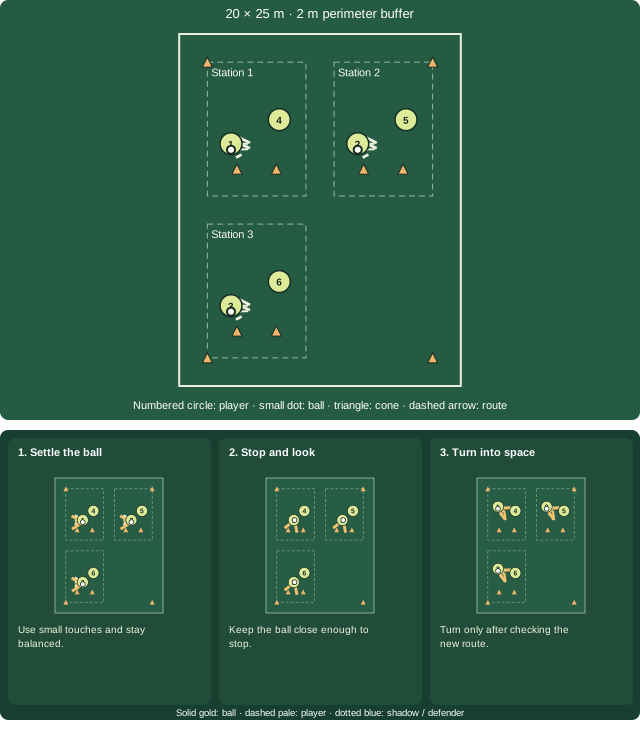
20 × 25 m clear area with a 2 m perimeter buffer. 3 numbered stations, 6 numbered player slots, 3 balls and 10 cones. Each station shares one ball and rotates roles; dashed arrow shows an example travel or pass route. Focus: Stop before space runs out, then leave through a clear inside route. Diagram shows starting positions, not fixed player locations. Three steps show stop turn using the first round's numbered players. Solid gold routes show the ball; dashed pale routes show player movement; dotted blue routes show a shadow or defender. Routes stay inside each numbered station. 1. Settle the ball: Use small touches and stay balanced. 2. Stop and look: Keep the ball close enough to stop. 3. Turn into space: Turn only after checking the new route.
Round-by-round player roles
| Round | Assignments |
|---|---|
| 1 · 60s | 1: carrier (station 1); 4: receiver / shadow (station 1); 2: carrier (station 2); 5: receiver / shadow (station 2); 3: carrier (station 3); 6: receiver / shadow (station 3) |
| 2 · 60s | 1: receiver / shadow (station 1); 4: carrier (station 1); 2: receiver / shadow (station 2); 5: carrier (station 2); 3: receiver / shadow (station 3); 6: carrier (station 3) |
| 3 · 60s | 1: carrier (station 1); 4: receiver / shadow (station 1); 2: carrier (station 2); 5: receiver / shadow (station 2); 3: carrier (station 3); 6: receiver / shadow (station 3) |
| 4 · 60s | 1: receiver / shadow (station 1); 4: carrier (station 1); 2: receiver / shadow (station 2); 5: carrier (station 2); 3: receiver / shadow (station 3); 6: carrier (station 3) |
| 5 · 60s | 1: carrier (station 1); 4: receiver / shadow (station 1); 2: carrier (station 2); 5: receiver / shadow (station 2); 3: carrier (station 3); 6: receiver / shadow (station 3) |
| 6 · 60s | 1: receiver / shadow (station 1); 4: carrier (station 1); 2: receiver / shadow (station 2); 5: carrier (station 2); 3: receiver / shadow (station 3); 6: carrier (station 3) |
| 7 · 60s | 1: carrier (station 1); 4: receiver / shadow (station 1); 2: carrier (station 2); 5: receiver / shadow (station 2); 3: carrier (station 3); 6: receiver / shadow (station 3) |
Equipment: 3 balls · 10 cones · 0 goals
Round-by-round player roles
C = carrier · R = receiver / shadow. Times are activity seconds; briefing, rest and transition are separate.
| Player | Station | R1 60s | R2 60s | R3 60s | R4 60s | R5 60s | R6 60s | R7 60s |
|---|---|---|---|---|---|---|---|---|
| 1 | 1 | C | R | C | R | C | R | C |
| 2 | 2 | C | R | C | R | C | R | C |
| 3 | 3 | C | R | C | R | C | R | C |
| 4 | 1 | R | C | R | C | R | C | R |
| 5 | 2 | R | C | R | C | R | C | R |
| 6 | 3 | R | C | R | C | R | C | R |